Such is the curse of mingling in winter! I attended a gathering in the village hall to celebrate some festival or another – I don’t recall which, beyond thinking that the hedgerow-gathered decorations were gaudy. I spoke to as many of the local folk as I could, which is a duty that as Lady of Blindingham Hall I feel is impossible to shirk. I have paid a terrible price, however, as it seems that one in every ten of them was awash with infection.
My sense of civic charity – which compels me to spend time with those whose lives my patronage supports – has been my downfall, I fear. I have coughed like a horse for days. My fever is high and my chest feels as though the devil himself is bestride me. I have been confined to bed for too long, and scarcely know whether it is day, night or next Tuesday.
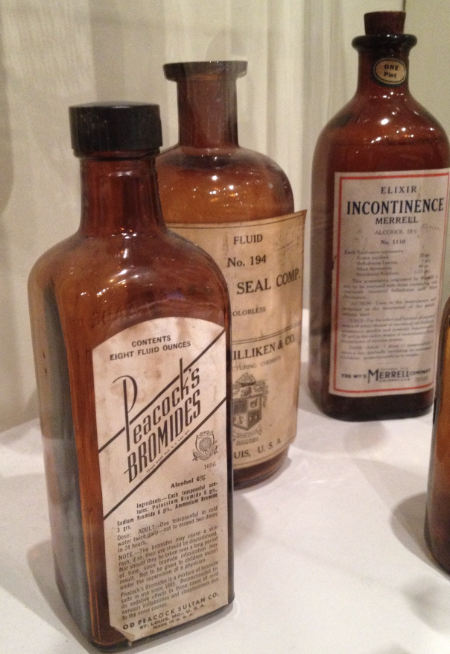
Villiers creeps into my room every so often with a tincture or a dollop of bread sauce. He tries to be attentive, I can see he wants to do his job, but he is clearly petrified of contracting whatever it is that has laid me so low. I am lonely enough up here already, without being treated as a pariah. I must speak to him when I am well again, and make him understand that to be my servant he must actually serve me, not avoid me.
I shall attempt to dress in the morning – assuming my maid is not as scared to be near me as Villiers is – and may even try to take tea on the terrace. The weather is bright, but I can see frost across the chapel roof. Papa always used to say that fresh air was the best Physic. He often refused whatever the doctor offered, and not for want of being able to pay for it, oh no. He simply believed that nature was its own medicine.
Lord above, will no-one rid me of this vexatious woman!
Earlier this year, Villiers came to me with a request that I wish to the Lord every day I had chosen not to grant. He stood before me with his head in a sideways tilt. Bitter experience told me I was about to agree to something I would regret, and I was right. As he prepared to make his case to me, he was holding a small silver cup. He polished this cup occasionally whilst trying to address me, haltingly, as if his words powered his hands.
‘Ma’am’ he said. He twisted the silver cloth and had the look of a cat who has just stepped in goose grease. ‘Ma’am I wonder if I might press the interests of a person close to me. A person whose welfare is important to me if to no-one else. A person who……’ Emotion overcame him. My interactions with Villiers have taken this pattern as I have recorded before, so tiresome. But he is a good servant, so I waited for him to compose himself.
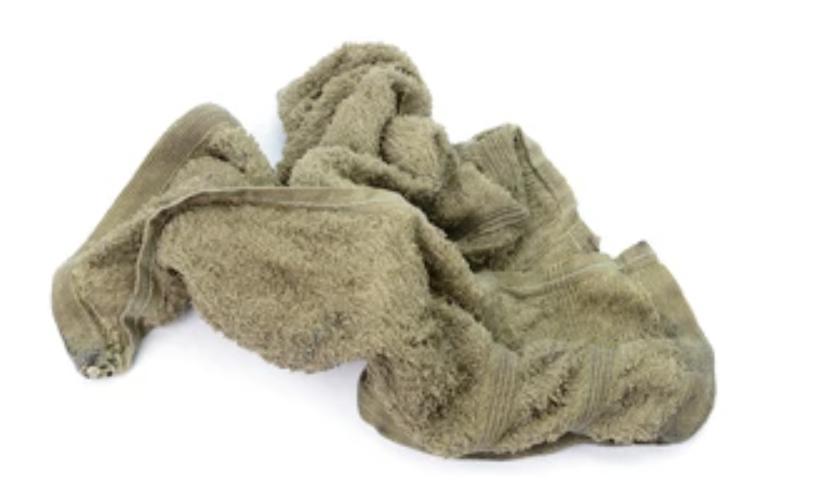
‘….who….I gave my word…. it is a young lady …wait! No! Ma’am you mustn’t think….oh!’ He dropped his cloth and bent forwards to retrieve it. I noticed that the cup was one I had given him one birthday, as a token of my regard, and was glad that he had reserved his clumsy ministrations for a possession of his own, not mine.
He continued with his fluster, ‘No! Not the sort of female you…oh, my goodness no….Ma’am, she is the daughter of a dear friend of mine. He passed before Christmas and now she has nobody. None but me, and – I pray – yourself.’ He looked to the heavens as if to confirm a kept promise to his departed friend, and then back to me – for my answer.
‘Villiers,’ I said ‘Villiers, I can make no sense of this, but I can see it means much to you. What exactly do you wish me to do for this person?’
‘I wish for you to give her a job in the household, a menial role will suffice, one which will provide you with a service and her with a roof and soup.’ His eyes filled again with tears, as they often did, in truth, but this time I believed them to be real.
After a little more of his pleading I allowed myself to be persuaded. I do need staff, and the business of finding them is not as easy as it was. So, two days later he brought her to me, with her valise and spare boots. ‘Ma’am’ he said ‘Pray be introduced to Anne, of whom I spoke.’ He pointed to her knees, unable to look me, or her, in the face. I think he knew, but could not defend, what he was doing.
‘Anne will work below stairs, if you will permit it. Beneath the parlour staff. Under Cook, as a sous-servant. Sous-staff. You will likely never see her, or once a week at most – when you go down to speak of the expenses.’
I agreed terms with her – 3 shillings a year plus food and a bed, for I am a generous woman – and sent her straight downstairs to the kitchen. I learned later that Cook refers to her as sous-anne.
Villiers was right, I hardly come across her, thank all the angels.
I have never met such an empty creature, not even in the Cornbench’s kitchen. With her round, red face and yellow hanging hair. Her whispery voice and sullen mouth. Her conviction that she is mistreated and misunderstood. Everything about her is a nothing. I can not understand why Villiers wished for me to offer her the protection of the Hall and my employ, but he begged me and – because I am a sympathetic woman and a good mistress I keep her on. Indeed, should I fire her I am sure she would still stay, as a spirit ghoul.
She appears as if from nowhere, and sighs a little before settling to her work. No sooner has she started the simplest of tasks, she has to stop to rest. If exhaustion were a liquor I swear she would be drunk from daybreak to dusk. Villiers ignores her, Cook despises her. She cries ill-treatment – I can not think she deserves any other kind.
Such a cold and gloom-ridden start to the year. Villiers took to his bed soon after the festivities were over, declaring himself to be exhausted and possibly infectious. My view is that neither of those conditions should prevent him from carrying out his servants’ duties, but apparently the fashion these days is for employers to accommodate illness in their staff and release them for a day or so to recuperate. I attempted to keep him upright long enough to remove the decorations and store them away but he resisted me. Quite vocally.
‘Ma’am’ he said ‘I trust that you know me to be an assiduous man. I have served your family to the best of my ability and take great pride in my work. However, I simply must be allowed to tend to my own needs on occasion. Surely, Ma’am you will do me this courtesy, if not I am really not sure I can……’
I held up my hand, hoping to stop him before he burst into tears.
‘Villiers, you know how greatly I prize your service. Indeed I showed my appreciation just days ago when offering you the remainder of our Christmas supper. Whatever it is you wish to say to me must be said in the knowledge that I am satisfied with your work here. I hope you can believe that.’
‘I do believe it, Ma’am and am thankful for your kind words. But I pray you will allow me some time to address this fever, for I am quite put aside by it.’
He did look a little hot, and his eyes were shining.
I asked him to complete the rearrangement of the Hall before abandoning me to the vagaries of the Boy, the Cook, and whoever else. He stared a little wildly at me and fell against the Blue Room door, with a tiny scream.
So, I had to allow him to go to his quarters. I had no notion of how long he would be hidden away there. Four days, it turns out. Four days! Four days when I had no help bar the provision of my meals, arranging of my clothes and the lighting of the fires. If he is ill again in the summer I shall be unable to ride, I shall not take tea on the terrace and my letters will go unposted. I can’t allow this to endure.
Mrs Cornbench called over, bringing with her one of her frail and ghostly children with a basket of jams they had gathered from their kitchen. The child was learning to make marmalade, she told me, and I was to be the lucky recipient of her first batch. I accepted the basket – freeing up her bony wrists as I thanked her – but I do not intend to taste the jam or the marmalade. I shall send her a note soon to give the impression that I am grateful, but in need of no further supplies.
On learning of my plight due to Villers’ incapacity, Mrs Cornbench told me that it is becoming harder these days to find people willing to serve and that for a person to choose to join one’s household one has to offer inducements over and above a rate of pay.
The Cornbench servants, I learn, have half a day off each week, and a full two days in August to do with as they please. Their physician’s bills are paid for them, and they enjoy the same meals as the family, although not at the same table of course.
What nonsense!
Villiers will not be enjoying that level of luxury in my employ – not while I am still mistress of Blindingham Hall!
Cook has refused to keep vittles in the ice-house for some time. She claims the entrance is haunted – by what, I do not know – and says that the journey back up through the herb walk is too much for her legs at her age. She has taken to storing cheeses and uncooked meats wrapped in muslin or some such fabric and hung on string inside in barrels of cold water. I am no specialist in the culinary field but even I know that dangling poultry in standing water for a week is more likely to spoil than preserve.
Were I the sort of person to be satisfied by a diet of only vegetables, I suppose Cook’s laziness would affect me less. But I love a cooked fowl, today of all days.
I am reduced to sending the Boy over to the Cornbenches to ask if they have any meat to spare – not one of them looks as though they benefit from the goodness that a side of beef provides, but they keep chickens and if there is one left alive this morning I must hope they take pity on me. I do not wish them to invite me to join their festive supper – I can think of nothing less joyful, short of sticking my head in the sewing basket.
I will address the issue of Cook’s laziness when the New Year celebrations are over. She does make a good pudding but I fancy there are others in the village who can soak fruit and ward off demons whilst going about their duties.
Finding staff is tiresome. Local people are increasingly disinclined to devote themselves to servitude, I find. Quite how they expect to make their livings I do not know. I have decided to speak to the school master at his earliest convenience to see how he is filling the children’s heads.
I have always had others at the front of my heart and mind and I pride myself on my awareness of the plight of many, especially at this time of year. I have become aware of a collective need, which requires my consideration.
At the choral evensong last Sunday, Reverend Dibleigh spoke to the congregation about looking forward. He is an interesting man to listen to, with his gentle voice and those artistic gestures. He spoke of the Christian church and of God – of course – but he was careful to make his words more closely relevant to the matters of the village. The welsh woman at the Post Office was moved to tears, it seemed, when he talked about the importance of communication, and how we Blindingham folk must come together at times of misfortune as well as celebration. How we must ‘combine resources’, ‘give generously towards joint ventures’ and look to create a ‘cathedral to the community’.
His sermon had great appeal.
Afterwards, with a mince pie and a warming tincture, he showed me, again, drawings of a beautiful little church, with a sweet little room to one side. And a larger, adjoining dwelling. These, he said, would be the new premises for the people of the village to share in our celebration of the Lord and each other, at Harvest time, for weddings and other gatherings. His commitment to supporting us at such events would, he assured me, require him to live close by in enough comfort to enable him to concentrate his thoughts on our needs, as his own would be taken care of by the house – and a couple of people employed to help him in its day to day running.
He has asked to speak to me after we have celebrated the start of the New Year (how can it be 1861 already?) to discuss the plans in greater detail. He was not at all forthcoming about the finance he has secured. I can only assume this was from respect for the Greater story we must celebrate tomorrow. Joseph and Mary were not wealthy, yet were given shelter at their time of need. Perhaps this is Reverend Dibleigh’s Christmas message – to ask for help is to be confident that one’s wishes will be granted.
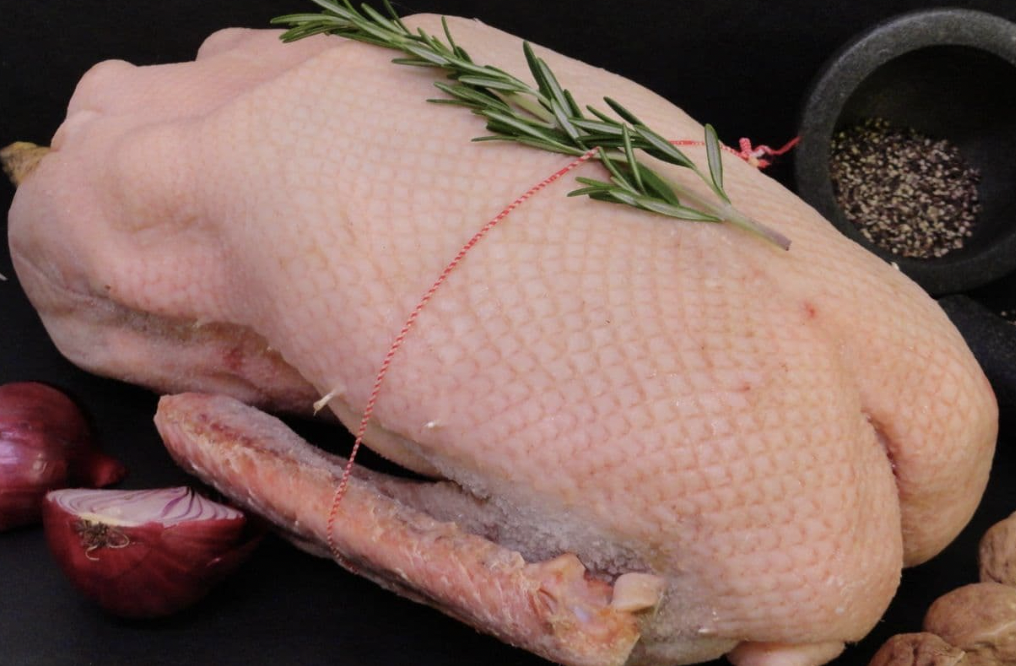
I must go down to the kitchens now – I am told that the goose that was delivered might be rancid. If that is the case, this may be the Blindingham Butcher’s last order from me. I have no idea how he nurtures and slaughters his stock, but the preservation of it has always been questionable.
How tiresome it is to be popular! I have received an invitation to a meeting next Sunday evening down in the village, in the rooms next to the Church. I fear it will be as cold as the devil’s heart, though more full of welcome. Reverend Dibleigh has specifically asked that I be present to witness his account of improvements that might be made to the church buildings next year. I am flattered that he has chosen me to give him my opinion – my refurbishment of the Hall after the fire was a triumph and I am pleased to be able to pass on the fruits of my experience.
I shall accept the invitation, of course, but will ensure that Moss is waiting outside with the trap all the while and will make my excuses as soon as is polite. I can look at drawings and listen to excitable planning for perhaps a half hour but I must be able to get away. I wonder whether I may be called upon to oversee the work when the decision has been made. And I am interested to hear where the funds have been found to pay for it.
Villiers has started to decorate the Hall. He has a flair for such things and I am happy to let him have his way. I sit down with him every October as he lays his ideas before me and I pretend that I have an opinion about his chosen theme, but I do not. I indulge him by cooing over tiny pieces of fabric and dried fruit; I exude amazement at a new berry he has sourced from the hedgerow and though I am always careful to express caution lest Dauncey should swallow a berry by accident, I do in large part leave the arrangements to him.
But this year I may have to put my foot down. I was not aware of a current and entirely unwelcome penchant he has for displaying the stuffed skin of dead creatures. This is a most unpleasant turn of events. I was greeted on my way to breakfast this morning by a still, small animal with tiny, dark eyes and scrappy whiskers – sitting in pride of place on the mantel in the entrance hall. I confess I screamed and was half way back to my room before I understood that no-one was responding to my calls for someone to bring a spade and kill it.
I approached the creature again – only to find it quite dead, with its scaly claws attached to a piece of wood. And a brass plate which read ‘mustela fidelis’. I carried on into the breakfast room, but I must say my appetite had quite left me.
Papa always said one should eat upon waking, so I sat down, as usual. Whilst waiting for the winter marmalade to soften, I asked Villiers what in the name of all holy was a dead animal doing on the hall mantel.
“Ma’am, that’s Martin. I wanted him to spend the festive season indoors now that he no longer needs to be by the river.” He looked at me with an expression I have rarely seen on Villiers’s face – a mixture of compassion, guilt and excitement. Like an evening spent at a freak show.
I waited for him to continue.
“Martin lived mostly down by the boat-house. Jennet used to feed him most days, but in the last few years he has naturally had to fend for himself. I was not inclined to keep up the tradition – a decision I must say, Ma’am, that I deeply and honestly regret.”
Villers passed me a marmalade spoon and poured my second glass of tea.
“Martin passed a month ago – a blessing if I’m honest, he would not have enjoyed another winter – and I gave him to that man in the village. The one who wears a leather apron but never sharpens knives. He told me he could preserve Martin’s spirit from within, and would have him back to me by the end of the week. And so it was. Martin is here, and warm. Thank God.”
Villiers was close to tears now. I had not seen him quite so moved since the death of Jennet himself.
“I am sorry you have been so saddened by Martin’s passing, Villiers, but I am at a loss as to why he is so important to you and why I should be subjected to seeing him every morning in such an exalted position in my entrance hall.” I said. “He is neither functional nor festive and I wish to have nothing in my house that is not one of the two, or both.”
“Am I to understand you wish me to remove him Ma’am? Might I be permitted to place him somewhere else indoors, but not within your ladyship’s sight?”
I confess I was beginning to feel guilty myself, almost as if I was condemning this creature to a second passing. I decided to give myself the opportunity to relent, if only to stop Villiers from sniffling so close to my toast.
“If you can tell me why you care for it so much, and why you have named it Martin, I will give you my final decision as to where it can be placed.” I am a fair woman and do not wish my staff to think I do not have sympathy for their feelings.
Villiers stared at me – visibly torn. Then he said “I called him Martin when I first saw Jennet with him by the boat-house Ma’am, because he brought to mind a man I used to see occasionally in the village. His name was also Martin and he was similarly wiry and whiskered, with a quickness to him which not many people possess. That Martin was an under-secretary in the office of the Member for East Hertfordshire. He was not important, but I recall him nonetheless.”
“I see. But why does the memory of a small man of little consequence move you in this way?”
“Ma’am forgive me” Villiers squeaked through a choked back sob, “I hardly understand it myself. I only ever met him outdoors, on an evening, usually after a public meeting of the village elders. Bringing this Martin inside gives me a sense of recompense I can barely express.”
So, because I am a woman with a heart, I will eat my breakfast every morning til January 6th under the gaze of a forgettable river dweller named Martin. And Villiers will be forever grateful to me.
But on January 7th, Weasel Martin will be in the woodshed.
I fear my faith in Josiah’s innocence may have been misplaced.
Word has reached me that the man I married is engaged in activity more befitting a natural Cornishman. Were Blindingham next to the sea, and not an inland hamlet, he might indeed have spent his time ‘beachcombing’ at low tide instead of boring me with his opinions. I do not believe he steals from the sea, but I must now accept that he may recently have acquired funds by less than honest means.
I heard he has been seen of late keeping murky company; sidled into ale-house corners with mean-eyed men and their spineless adjuncts. Whispering long into the night, swearing allegiance to powerful men whose wealth has not come from hard work.
I had dismissed that talk as local rumour, designed by well-wishers to confirm for me that my discarding of him was the right decision. Not that any such affirmation is necessary. I did not believe the talk and had no need to hear more of what Josiah does with his time now that I am free of him.
But today I received news which may prove the rumours true.
Such is his regard for his own views, and his contempt for ordinary folk, that he has begun to squirm his way into a life of London politicks. I gather from the post-mistress – whose knowledge of such things is certainly current – that Josiah has given money to people dead set on a Whig parliament next time. He hopes, I am given to believe, that if he pays enough to the Whig men they will put him up to be voted upon by those empowered to do so. I do not aim to understand such things and think it indelicate to discuss them in the circles I enjoy. But I do know that a man like Josiah – cocksure, bribable and utterly without shame – is well suited to the world of electioneering and public office.
I have asked the post-mistress not to tell me any more about it as hearing of him causes me distress – which of course means the old witch will take every available chance to begin a tale and then withdraw it upon ‘remembering’ my wishes. This way I will stay abreast of his antics without asking for details directly.
Josiah – a politician! There was never a man more deluded and surrounded by cruel fools. God help the people who elect him if it comes to it.
I can hardly hold my pen to write, such is my anger at what I have been forced to consider.
I do not pretend to claim that Josiah was above reproach. Indeed, as a husband he disappointed me on more occasions than I feel it reasonable to endure. He has a confidence about him that is not borne out by his achievements and his personal attention towards me was at best unwelcome and at worst unbearable.
But he is a man of honour.
I can not allow Josiah’s name to be besmirched in the manner adopted by our new vicar, and will do my utmost to stand up for him in the village. Reverend Dibleigh had the temerity to sit at my table and ask me whether the gossip he had heard was true.
‘Gossip, Reverend Dibleigh?’ I asked ‘Why does gossip play a part in your contribution to our community – have you no better way to spend God’s time than listening to prattle from villagers with more corn than sense?’
He had the grace to blush at my question, revealing as it did that his social interaction with the women of the village takes up an inordinate amount of his attention.
He asked me whether Josiah had indeed ‘swindled’ – a coarse term I only use in the reporting of what was actually said – the previous incumbent whilst taking charge of administering the weekly collection. Having laid such a blow, the Reverend then sat in silence. As if offering me a confession I had neither requested nor needed.
The effrontery of that man is enough to silence cockcrow, I declare..
Last night was the queerest of evenings. It is probably far too soon for me to give a proper account of it, but since I have been thinking of nothing else since I waved the vicar off down the approach, I have decided to write down my thoughts as they tumble from me.
The new vicar of Blindingham is a strange fish. If I discover nothing else about him, I have discovered that. He hasn’t yet been in post for a full year, yet he seems to know everything about the village and all its foibles – such that he had felt confident enough to warn me not to expect success at the Harvest judging, and indeed to show humility in the face of defeat, whether I felt it or not.
How dare he presume to dictate my behaviour in this, or any other matter?
He arrived, as invited, at 7pm. He may be well versed in matters of the church and ecclesiastical protocols, but he clearly has not moved in the same social circles as I have. I had expected him to arrive at 7.30 – as any other guest would have known to do – so when Villiers leapt upstairs to tell me he was waiting in the breakfast room I was not yet fully dressed, and had to rush my hair. I do so hate meeting new people without properly dressed hair, it implies a lack of self-respect. So I was already slightly off guard when he greeted me and I could not stop myself from exclaiming on the softness of his hands.
“Oh Goodness!” I said, like a ninny, ” I expected your hands to have seen more of life than this!” What did I mean by this? I am not sure I know – just that whatever work a vicar does in his week it clearly does not involve anything heavy or outdoors.
“Mrs Hatherwick, may I extend my deepest gratitude for this invitation. I confess I am giddy with anticipation of a repast prepared by the famous Blindingham Cook!”
I gathered from this fulsome first sentence that the vicar has not been apprised of the story of our previous Cook, whose notoriety was not confined to the quality of her suppers.
I immediately regretted not inviting someone else to join us, to dilute the atmosphere a little. The Reverend Dibleigh, new to the combined parishes of Blindingham and All Stokes, took to gazing a little too intently at me for my comfort.
We were part way through the fish course when the Reverend’s intentions became apparent. “My dear Lady,” he said, with a sliver of salmon just sidling onto his lower lip, “I have heard a great deal about your family, what a wonderful man your father was, may he rest among us, and how you have triumphed over the frailties of marriage and subsequent rebirth as a single woman”
I was annoyed at the way he seemed to have summed me up in one sentence, but I said nothing. I looked at him, noticing yet more softness in his features than I would have expected.
“I wish not to appear over intimate” – it was too late for that, but no matter – “but I feel I must discuss a delicate subject with you. Experience tells me that honesty and openness are twin bedfellows, both adept at drawing out the essence of an issue. Would you not agree?”
‘Intimate’? ‘bedfellows’? ‘Essence’? What on earth could the man be about to discuss? I was on the point of reaching for the bell to summon Villiers for protection, such was my alarm at this approach.
“Reverend Dibleigh, I pride myself on my ability to speak plainly and truthfully – it is a matter of great importance to me that people deal directly with one another and not dress up a situation to be something it is not.”
“I knew it!” he shouted. “I knew you to be a woman of integrity and compassion!”
His excitement in the wake of what I considered to be a basic stepping stone of conversation was quite overwhelming. I found myself unable to respond in a like manner, so remained quiet, at considerable personal cost.
“My dear, please allow me to abuse my position as a member of the clergy to broach a subject about which many dare not speak. My role – as a conduit between our community and Our Lord – affords me the confidence to ask you a question outright. One which many in the village wish to ask, but their station prevents them.”
What question? Does he know something I do not – I find that hard to believe. What possible question could this man have for me that is shared with everyone else in the village, people who have known me since Papa was an Alderman, generations of whom have served us at the Hall?


 Effie in Blindingham